
There are moments in the histories of organized criminal enterprises which drag their operations into the light for the public to see.
For the American Mafia, this arguably occurred on the grandest scale in 1963, when former member Joseph Valachi testified to the inner workings of the mob during televised hearings before a congressional committee.
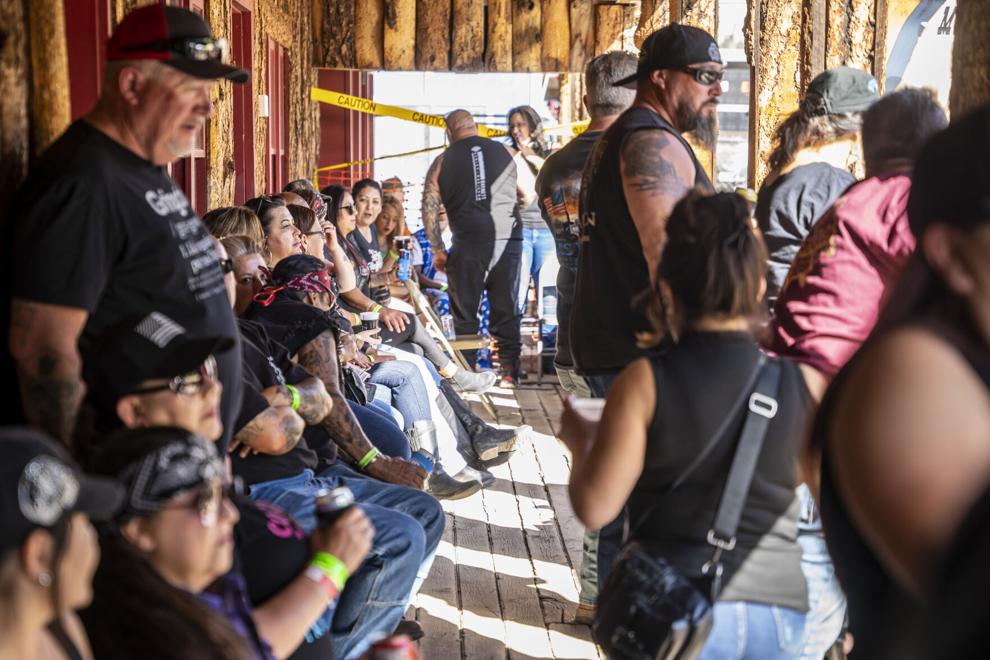
For outlaw motorcycle gangs operating in New Mexico, the moment when people really started paying attention may prove to be the fatal May 27 shootout during the Red River Memorial Day Motorcycle Rally.
Its immediate impact left three people dead and five wounded. Reputed Waterdogs member Jacob Castillo of Rio Rancho is charged with first-degree murder in the death of 46-year-old Damian Breaux of Socorro, while two others are facing lesser felony charges and a misdemeanor.
However, recently filed court documents point toward years of turmoil in the state with two rival gangs — the Bandidos and Mongols — perceiving themselves to be at war with the other.
Last week’s shootout was caused by a Waterdogs member taking a wedding picture with members of the allied Mongols, according to an affidavit for Castillo’s arrest warrant. Along with the dead and injured, the picture’s impact also brought an end to Red River’s yearly motorcycle rally and brings into question whether others — like Las Vegas, N.M.’s 18th annual Rough Rider Motorcycle Rally scheduled for late July — can be kept safe.
Las Vegas City Manager Leo Maestas said city officials met with rally organizers for discussions in the wake of the Red River shootout. He said police Chief Antonio Salazar is scheduled to attend a meeting with federal and local law enforcement in the coming days to discuss the rally’s future.
“As a city, and from a public safety standpoint, the safety of our community and our constituents is really our priority, and that’s what we kind of look at every day. … As we move forward, that’s always our main focus when our discussions take place,” Maestas said.
Salazar did not respond to requests for comment.
Ernest Mondragon, who serves as the rally’s committee chair and has been involved with the event since its inception, said he did not want to comment on whether the Rough Rider Motorcycle Rally — or others like it — could be affected by the shootout.
“We’re just working with our town, with our law enforcement and our city officials on moving forward,” Mondragon said.
Complex organizations
As the specter of the Red River shootings casts a shadow on future rallies, Castillo’s pretrial detention motion filed by state prosecutors in 8th Judicial District Court on Friday details the FBI’s efforts to track and charge suspects in crimes linked to outlaw motorcycle gangs.
A lengthy 2020 search warrant application written by FBI Special Agent Bryan Acee included in the motion paints a picture of the intricate hierarchies of outlaw motorcycle gangs and delves deep into the Mongols — a gang whose connection to the Red River violence is believed to be incidental, though it maintains a troubling presence in New Mexico, according to the document.
Acee states the Mongols had about 1,500 members worldwide in 2020, with two chapters in New Mexico — the Southwest and Duke City chapters — and its purpose includes enriching its members through illegal activity and “preserving, protecting and expanding the power of the [Mongols] through the use of intimidation, violence, threats of violence, assault, kidnapping and murder.”
Acee also wrote the Mongols — like similar outlaw motorcycle gangs — keep detailed records of criminal activity and have an established structure and hierarchy; all chapters are beholden to the “Mother Chapter” in Montebello, Calif.
Acee listed numerous crimes members of the Mongols committed in Texas and the Albuquerque area from 2019 through 2020, including assaults, robberies and fatal shootings.
As of 2020, Acee wrote, the Bandidos had traditionally been the dominant motorcycle gang in New Mexico. However, violent conflicts occurred over several years preceding 2020 as the Mongols expanded into the state.
Acee originally penned the lengthy search warrant application while trying to mount cases against three founding members of the Mongols’ Duke City chapter. An Albuquerque Journal article at the time stated then-chapter president Carlos “Chuggs” Alvarado Jr., one of Acee’s three targets, was not charged. William Lee Westfall was sentenced to two years in federal prison and three years of supervised release after pleading guilty to felony possession of a firearm, according to federal court records. He was released in December 2021, according to online federal prisoner records.
The third target of Acee’s application — Isaiah Matthew Chavez — was initially charged federally with possessing a firearm or ammunition while under indictment, but the charges were quickly dropped, online federal court records show.
Local police response
New Mexico State Police officer and agency spokesman Wilson Silver said officers on patrol handle encounters with gangs like the Mongols like any other suspect.
“Obviously we’re not going to pull over — one officer is not going to pull over a whole group of motorcyclists. … If there’s a few here and there, our officers can make a traffic stop,” Silver said.
He later added: “I think it comes down to respect as well. … You treat someone the way you want to be treated.”
Noting his department was warned about a group of Bandidos heading to Red River, Silver said having such intelligence is key to securing motorcycle rallies.
“Considering what happened in Red River — our guys are there within seconds — so I don’t see that changing. … Violence, just like [state police Chief Tim Johnson] said, it’s not going to be tolerated,” Silver said.
As for Santa Fe, both the police department and county sheriff’s office said new personnel are not given any special instruction on how to approach suspected outlaw motorcycle gang members out in the field. County Sheriff Adan Mendoza said his agency has not had any recent major run-ins with gangs like the Bandidos or Mongols.
“We are aware of them. They’re — you know, I’m not going to say that there [haven’t] been motorcycle gangs that have traveled through or have been in Santa Fe. We haven’t really seen major threats from them,” Mendoza said, “We haven’t dealt [with outlaw motorcycle gangs] on a scale that Red River has, or anything close to that.”
Deputy city police Chief Matthew Champlin wrote in an email he believes outlaw motorcycle gangs are covered in the law enforcement academy and added they are also usually referred to during advanced training provided upon request.
“The advanced training usually covers topics such as identifying [outlaw motorcycle gang] members, understanding their culture, and criminal activities. [Our department] also may issue intelligence briefings regarding the presence and activities of [outlaw motorcycle gangs] if the information is relevant to Santa Fe,” Champlin wrote.
Champlin said that while it may be concerning for officers when seeing a person or group donning clear gang insignias, the proper response depends entirely on the situation.
“It’s important to understand that approaches to dealing with [outlaw motorcycle gangs] can vary between jurisdictions based on presence, current crime trends, violence, and so on — there is no one-stop approach to [outlaw motorcycle gangs] any more than there is a one stop approach to any gang,” he wrote.
- 111th Capay Valley Almond Festival

- UNBELIEVABLE! 1%ers Outcast, Hells Lovers & Sin City Party Together St. Louis

- Brotherhood of Distinction Motorcycle Club (BoD MC) appears to have “faced down” ICE (U.S. Immigration and Customs Enforcement)

- Indiana judge’s shooting linked to motorcycle club and failed bid to block trial testimony, authorities say

- Olympic boxer, outlaw biker Phil Boudreault dies at age 50

- Wild LI biker brawl between Pagan’s, Hell’s Angels leads to sweeping felony case

- H.A. & Pagans Indicted While Black Outlaws Party – Open Biker Talk

- Tampa City Council votes down ordinance banning wheelies and large biker groups on Bayshore, Riverwalk

- Pinconning man charged with torching Outlaws Motorcycle Clubhouse in Saginaw
- Keys motorcycle gang member arrested on charge of soliciting teen girl for sex

- Mongols biker gets 5 years for rioting at gas station during Bike Week
- Massive Crackdown on Comancheros in New Zealand: Nearly All Members Facing Charges
- Man Sentenced for Supplying Shotgun to Comanchero Gang Associate

- Cherokee Family Motorcycle Club’s Ninth Annual Jacksonville Toy Run

- Alleged B*EAST MG member who is an ex-constable deputy pleads guilty to murder in shooting of rival Sun Devils MC Member

 Black Dragon Biker News