
What Riders Need to Know and How to Be Heard
Why this matters to riders right now
Across the country, cities and states are turning to automated “noise camera” enforcement to crack down on excessively loud vehicles. Motorcycles are squarely in the spotlight—sometimes fairly, sometimes not. Whether you run stock or aftermarket, it’s important to understand how these systems work, where they’re popping up, how they intersect with existing laws, and how the motorcycle community can push for fair, accurate, and balanced enforcement that respects riders’ rights.
What are noise cameras?
The tech in plain English
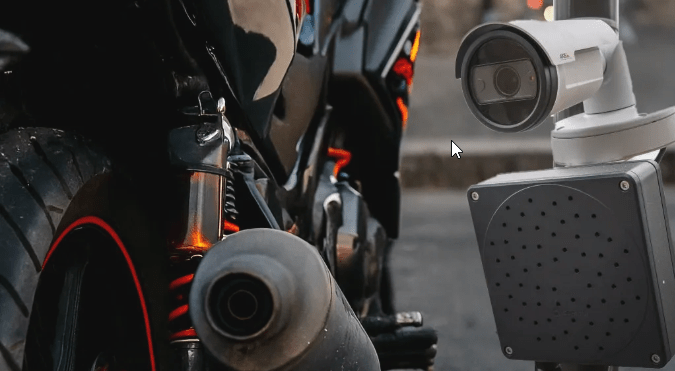
Noise cameras combine a calibrated microphone array that is sound activated with camera enforcement and an automated license plate reader (ALPR). When the system detects sound above a set decibel threshold, it captures short video and a plate image. The footage is reviewed by an agency (often environmental or transportation) before a warning or citation goes out by mail. Thresholds, tolerances, and penalties are set by local or state policy, and cameras are typically mounted on poles on busy corridors where residents report frequent vehicle noise.
Where they’re being used
New York City has the most mature program, launched as a pilot and now expanding following strong political pressure around quality-of-life noise complaints. Other jurisdictions have explored or piloted similar systems, and interest is growing. If your city council or state legislature is fielding noise complaints, noise cameras may be on their agenda next session.
The legal landscape: stock, modified, and what’s actually illegal
Federal rules you should know
- The Clean Air Act’s anti-tampering provisions prohibit removing or rendering inoperative emissions controls. Many OEM motorcycle mufflers carry a label indicating they meet federal standards, and removing or altering those systems can violate federal law—even if your bike passes an informal “sound check.
- EPA also set federal noise emission standards for motorcycles and requires compliance labeling on OEM components. While those federal noise regs are older, the labeling and anti-tampering framework still matter when you’re asked to prove your exhaust is compliant.
State and local sound limits vary
States set their own on-road sound limits and test methods. California, for example, ties motorcycle sound limits to model year, with enforcement sections in the Vehicle Code. Other states reference specific decibel caps at given speeds or RPMs, and some allow officers to use a “reasonable person” standard if meters aren’t available.
There’s also a well-known industry recommended practice-SAE J2825-for roadside motorcycle sound testing. It lays out microphone placement, RPM protocols, and environmental conditions to reduce false readings and disputes. While not law in most places, it’s a credible, repeatable method that many agencies and rider groups point to when debating how to fairly measure motorcycle sound.
Why riders are concerned about noise cameras
Accuracy and due process
Riders worry about false positives: gear changes on a steep grade, a sudden throttle blip, a car or truck next to you tripping the microphone while your plate gets captured, or a gust of wind reflecting sound. If an automated system can’t reliably isolate your bike from other sources, the risk of unfair tickets rises. Motorcycles can also be penalized disproportionately if thresholds are set without considering how smaller engines make sound differently than passenger cars.
Transparency, calibration, and context
- Verification: Who reviews the footage, and how is the actual vehicle identified as the source?
- Calibration: How often are microphones calibrated, and are logs available to the public?
- Context: Are tickets based on a single spike or a sustained exceedance? Are grades, tunnels, and reflective surfaces accounted for?
Privacy and data retention
Any program using ALPR raises questions about data collection, retention, sharing with third parties, and access by law enforcement. Rider groups often support targeted noise enforcement, but they also push for strict limits on where data goes and how long it’s stored.
What you can do right now
Make sure your bike is truly compliant
- Check your exhaust for OEM or certified labeling. Keep documentation for aftermarket systems that meet applicable standards.
- Inspect for leaks. A tiny leak at a joint can significantly increase perceived noise.
- If you run an aftermarket system, confirm it includes a compliant baffle or dB killer when required. “Track only” systems can get you in trouble on public roads.
Carry your proof
Keep a photo of your compliance label and product documentation on your phone or tucked in your tool roll. If you get a mailed citation, you’ll want to respond quickly with clear evidence that your system is legal and intact.
Know your local limits and test protocol
Look up your state’s motorcycle sound standard and whether it references a specific test like SAE J2825. If your city deploys noise cameras, ask your council member or agency for the written threshold, calibration schedule, and appeal process. If they can’t provide it, that’s an advocacy opportunity.
Be strategic about routes and times
Early morning and late-night runs through dense residential corridors are likely to draw attention. If you commute or ride group in a watch-listed corridor, smooth throttle, timely upshifts, and steady speeds reduce chances of triggering a spike—even on a compliant bike.
Challenge bad tickets, respectfully
- Request the calibration records for the date/time of the alleged violation.
- Ask for the full audio/video clip to verify your bike is the actual source.
- Submit clear photos of your exhaust labeling and a sworn statement that your emissions/sound equipment is intact.
- If your jurisdiction recognizes SAE J2825, request or present a compliant roadside test from a qualified shop.
Community advocacy: shaping fair rules instead of fighting them later
Reasonable policy guardrails to push for
- Publish the decibel threshold, microphone placement, and calibration schedule.
- Require human review of each event and allow full evidence disclosure upon request.
- Set thresholds that reflect real-world riding, not lab conditions.
- Use SAE J2825 or comparable validated methods for contested cases.
- Start with warnings and education, then escalate for repeat offenders.
- Include motorcyclist representatives on advisory committees.
- Adopt strict ALPR data minimization, retention limits, and public transparency reports.
- Add sunset clauses and independent evaluations before permanent deployment.
Model messaging that works
Most residents don’t hate motorcycles; they hate window-rattling blasts at 2 a.m. Lead with shared goals: quieter nights, safer streets, and fair enforcement that targets truly egregious noise—regardless of vehicle type. Pair #RideRespectfully with #RidersRights and invite policymakers to a shop day or Bike Night to hear riders’ concerns firsthand.
Safety corner: loud isn’t a safety strategy
There’s no solid evidence that a loud exhaust alone meaningfully improves how drivers ahead detect you. Proven conspicuity tactics include high-visibility gear, strategic lane positioning, using your horn when needed, and maintaining a dynamic “safety bubble” in traffic. Those strategies work day in and day out—without painting a target on motorcyclists in the policy arena.
Bottom line
Noise cameras are likely to spread. If we sit it out, rules will be written without us. If we show up—organized, informed, and respectful—we can steer programs toward accuracy, fairness, and real community benefit while protecting riders who play by the rules. Bring your club, your shop, and your city council member into the same conversation. That’s how we keep the ride strong and the community on our side.
References
- NYC Department of Environmental Protection – Noise Camera Pilot Program: annual-report-noise-camera-enforcement-program.pdf
- New York State SLEEP Act (Stop Loud and Excessive Exhaust Pollution Act): https://www.nysenate.gov/legislation/bills/2021/S784B
- EPA – Vehicle and Engine Tampering and Aftermarket Defeat Devices: National Enforcement and Compliance Initiative: Stopping Aftermarket Defeat Devices for Vehicles and Engines | US EPA
- EPA – Noise Emission Standards for Motorcycles (40 CFR Part 205, Subpart D): https://www.ecfr.gov/current/title-40/chapter-I/subchapter-G/part-205/subpart-D
- California Vehicle Code Sections 27200–27207 (Vehicle Noise Limits): California Vehicle Code section 27200 (2025)
- SAE J2825 – Measurement of Exhaust Sound Pressure Levels of Stationary On-Highway Motorcycles: J2825_202007: Measurement of Exhaust Sound Pressure Levels of Stationary On-Highway Motorcycles – Recommended Practice
- American Motorcyclist Association – Position Statement on Excessive Motorcycle Sound: Excessive Motorcycle Sound | American Motorcyclist Association
- Electronic Frontier Foundation – Automated License Plate Readers (ALPR) Overview: Automated License Plate Readers (ALPR) | Electronic Frontier Foundation
- NHTSA – Countermeasures That Work (Motorcyclist Conspicuity and Protective Clothing): https://transportation.ky.gov/HighwaySafety/Documents/NHTSACountermeasuresThat%20Work-2023edition.pdf
Source: Nationalcoir.org
- Indiana judge’s shooting linked to motorcycle club and failed bid to block trial testimony, authorities say

- Olympic boxer, outlaw biker Phil Boudreault dies at age 50

- Wild LI biker brawl between Pagan’s, Hell’s Angels leads to sweeping felony case

- H.A. & Pagans Indicted While Black Outlaws Party – Open Biker Talk

- Tampa City Council votes down ordinance banning wheelies and large biker groups on Bayshore, Riverwalk

- Pinconning man charged with torching Outlaws Motorcycle Clubhouse in Saginaw
- Keys motorcycle gang member arrested on charge of soliciting teen girl for sex

- Mongols biker gets 5 years for rioting at gas station during Bike Week

- Massive Crackdown on Comancheros in New Zealand: Nearly All Members Facing Charges
- Man Sentenced for Supplying Shotgun to Comanchero Gang Associate

- Cherokee Family Motorcycle Club’s Ninth Annual Jacksonville Toy Run

- Alleged B*EAST MG member who is an ex-constable deputy pleads guilty to murder in shooting of rival Sun Devils MC Member

- Recent Hells Angels Clubhouse Forfeitures in B.C.: What to Know

- B.C. Govt Aggressively Targets Hells Angels by Suing to Seize their Clubhouses, Especially Langley
- Toys needed for the 2025 Tijuana Toy Ride

 Black Dragon Biker News